


The transformative power of exercise

Heather Ellis has lived with HIV since 1995. She is an HIV advocate, published author, journalist and motorcycle adventurer. Heather’s two books are the best-selling travel memoirs: Ubuntu: One Woman’s Motorcycle Odyssey Across Africa (Black Inc., 2016) and Timeless On The Silk Road: An Odyssey From London to Hanoi (Phonte, 2019). Heather is the communications and engagement coordinator for Positive Women Victoria based in Melbourne, a member of the National Network of Women Living With HIV Australia; and is a member of the community advisory board for the Melbourne HIV Cure Consortium. Read more about Heather at: www.heather-ellis.com

Back in 1997, when HIV meds saved me from certain death, I embraced exercise with the intensity that comes with second chances.
No one—no HIV doctor, ID clinic nurse, or even HIV peer support worker—mentioned the benefit of exercise. The only advice one doctor gave me was to eat lots of hamburgers. Afterall, my body weight had dropped to a scrawny 45 kilograms. And to this high fat, protein, and carbohydrate-laden diet, I added tropical fruits, banana smoothies, salads, steak, and fish.
Food occupied my every thought in those first few weeks out of hospital. But I knew exercise was just as important to my recovery. Short walks at first, then longer. Soon, uphill hikes and strength training were part of my routine. As my body grew heavier, stronger, and fitter, I felt a renewed vitality and strength of purpose.
While I received no advice on the benefits of exercise for people with HIV, I knew instinctively it was important. I knew that stimulating my circulation through increased breathing and heart rate would give an added boost to those life-saving HIV medications, pushing them into the deepest recesses of my tissues. When I later read that CD4 T-cells are made stronger through an interaction with muscle, I hit the weights much harder.
A stronger more robust immune system would mean my newly created T-cell soldiers (depleted to just 40 a few weeks before) were armed, pumped and ready to out-smart any HIV the antiretrovirals couldn’t suppress.
A holistic view of exercise
I take a holistic view of my health and wellbeing, both physically and mentally, and it is grounded in exercise. It’s in the strength of my muscles and in the circulation of my blood through regular cardiovascular fitness.
I’m not a marathon runner or a gym junky. I just do a short and/or fast-paced walk followed by some weights, resistance bands and stretching in my lounge room. Most mornings. But not always, not every day, as life is not a set routine.
The reason for regular exercise, getting my heart pumping and my breathing rapid, is to increase blood circulation. This not only gets more oxygen to my tissues and organs, but also to my brain where I feel those mood-lifting endorphins. Any feelings of doom and gloom don’t stand a chance to take root.
Combined with a healthy diet comprised of protein, vegetables, fruits, grains and nuts, and mostly devoid of processed foods, limited alcohol, no smoking, and no recreational drugs, my 60-year-old body rewards me with good health to fully live the exciting adventurous life that is mine today and for many tomorrows to come.
Can exercise combat premature ageing?
In my communications role with Positive Women Victoria, I’ve come across a growing body of research highlighting the benefits of exercise for people living with HIV, especially as we age. There is also research that shows people with HIV, even on HIV treatments and with an undetectable viral load, age faster than those without HIV. Personally, I don’t believe this applies to all people with HIV.
Consider all the variables and the diversity of lifestyle factors that people with HIV face? Financial hardship, a poor diet, and the stress of HIV-related stigma are just some of those variables. All impact negatively on physical and mental health and can manifest as premature aging and comorbidities like heart disease, kidney and liver disease, diabetes, and cancer.
I recently reported on the HIV science presented at the AID2024 conference in Munich in July. One of the hot topics was premature aging in people with HIV, and how by controlling low-level inflammation we can address this premature aging.
There is little we can do about the low-level inflammation generated by the HIV reservoir, but we can control other forms of inflammation in our bodies. There is data that shows co-morbidities double if not triple in people with HIV over the age of 65 compared to those without. As somewhat of an afterthought, however, the researchers did mention that other factors also come into play, including smoking, obesity, lack of exercise, poor diet, poor sleep, drugs, alcohol, HIV medication toxicity for some, and stress including from HIV-related stigma.
So, determining whether people with HIV age faster than those without is not just about the presence of the dormant virus hiding deep inside our immune cells. And it is encouraging that HIV scientists have now acknowledged this fact and advise that more research considering the impact of other factors is needed.
Even more health benefits from high intensity exercise
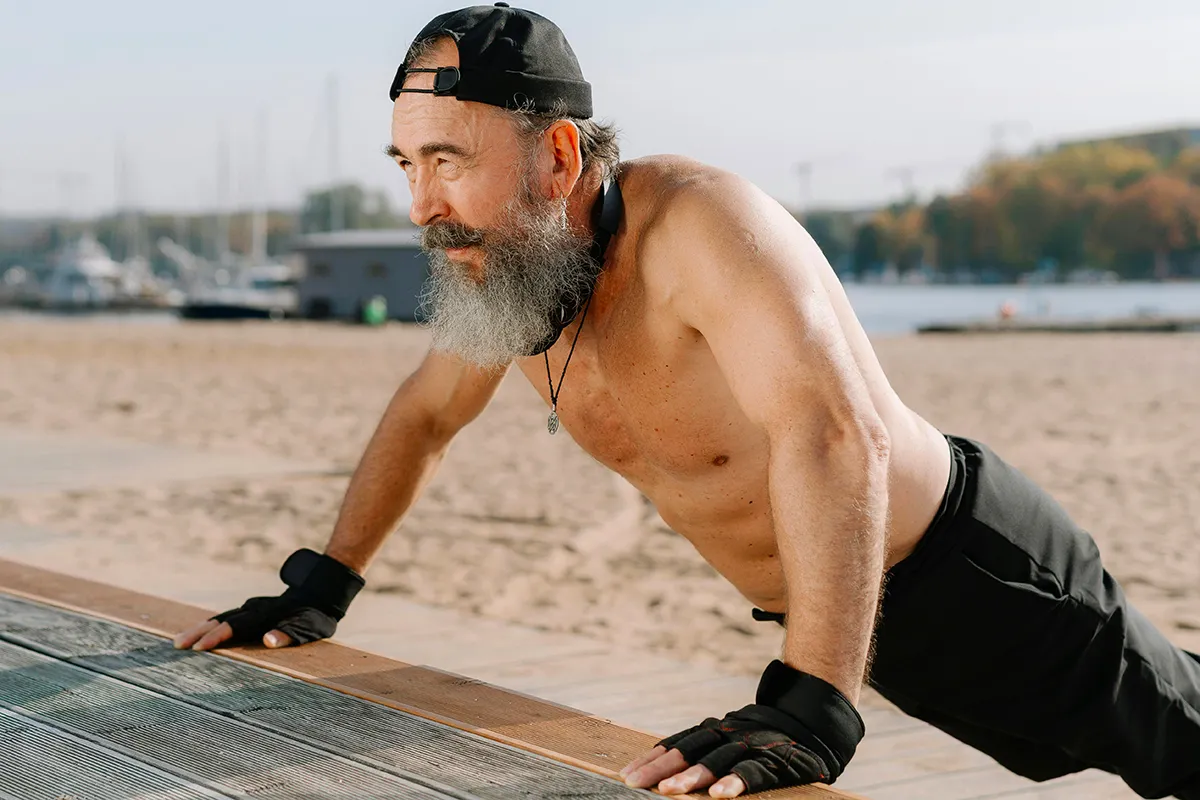
Another study from researchers at the University of Colorado presented at AIDS2024 was on how exercise can reduce premature aging and therefore improve quality of life for people with HIV. Their research showed the benefits are even more dramatic with higher intensity exercise such as cardio and strength training. The researchers concluded that older people with HIV should especially consider high-intensity exercise.
Results of a HIIT (High Intensity Interval Training) study over 16 weeks with 120 people with HIV aged over 50 years will be available in late 2024. High Intensity Interval Training involves short bursts of strenuous activity followed by short recovery periods. Examples include sprinting and circuit training.
Recent studies have indicated that high-intensity exercise can also influence immune function. Regular vigorous activity has been associated with reductions in systemic inflammation, improved immune response, and better overall health. These effects are particularly significant for people with HIV who experience low-level inflammation caused by the HIV reservoir.
I hope these two studies are the first of many where the results reinforce the transformative benefits of regular exercise, and especially high intensity training, for both physical and mental health and therefore improved quality of life for people with HIV.
While the benefits of exercise for people with HIV are proven, before beginning an exercise regimen, especially any high-intensity training, talk to your healthcare provider to assess your health status to avoid any potential risks. And don’t forget to combine your new exercise regimen with a balanced diet. Your healthcare provider can also connect you with an HIV-experienced dietician to advise you on a healthy eating plan.
Reference
Related posts

Farewell, my friend
We were an item in the early eighties before we were even aware that HIV was circulating among us although we’d heard reports about this mysterious virus, initially called GRID (Gay Related Immune Deficiency) coming from the USA. When the HIV test became available in November 1984 we both made a quick dash to the […]

Heterosexual men living with HIV in Australia
The only thing worse than being talked about is not being talked about.
AIDS2026: Is HIV remission the new cure?
AIDS2026 offered a glimpse into the “just around the corner” future of HIV treatment and care.
