


HIV challenges our Fijian neighbours

David Menadue was diagnosed with HIV in 1984 and has experienced a number of AIDS defining illnesses. He has been involved with HIV activism and policy advocacy since the late 1980s being involved in governance roles with NAPWHA, AFAO and Living Positive Victoria for many years. He is the author of an autobiography “Positive” published by Allen and Unwin in 2003 and was awarded an Order of Australia Medal in 1995 for services to community health.
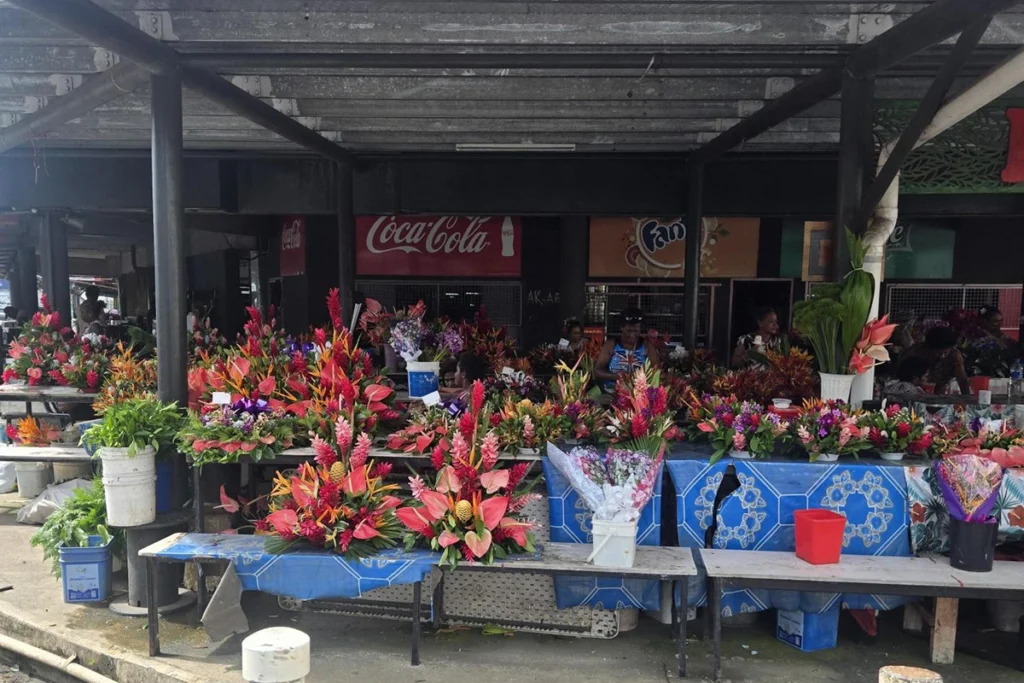
A Fijian flower market
About half this increase is attributed to the sharing of needles due to the rise in methamphetamine use. There is an acute shortage of needles and testing kits and only three clinics available for a country of many islands, so testing for HIV often involves long days of travel. The other half of cases are attributed to sexual contact, with few education campaigns to prompt people to test.
Of particular concern is a practice called “blue-toothing” which involves several people sharing their blood which is dosed with methamphetamine, because of the shortage of needles. This is believed to be a primary cause of Fiji’s rapid increase in HIV infections.
Few needle and syringe programs
In Australia, where we have had Needle and Syringe Programs (NSPs) for more than 40 years and extensive campaigns around HIV transmission, it seems reckless for people’s health to be put at risk like this. However, Fiji, with a population of only about one million, is not a well-resourced country and the government has only recently stepped in to try to control the epidemic. With the help of Australia (which donated $48 million), The Global Fund for HIV and UNAIDS has assisted the government to implement a Fijian National HIV Surge Strategy 2024-2027 and started a national testing, treatment and NSP program across the country. The government has also implemented the 95-95-95 targets—aiming to get 95% to know their status, 95% of those affected on treatment, and 95% virally suppressed.
There has been a fast tracking of NSPs and an expansion of HIV testing, treatment and outreach services.
A particular focus has been put on stigma reduction to create confidential non-judgmental care environments to encourage high-risk groups to seek testing.
Part of this strategy involved getting 15 people who inject drugs trained to give education and peer outreach to affected communities across the country.
Until now only about 36% of the estimated HIV-positive population are aware of their status and 24% are on HIV treatment. It will take some time and considerable help from international donors to turn this epidemic around. The potential implications of this epidemic spreading throughout the Pacific and involving Australia cannot be underestimated.
A personal story
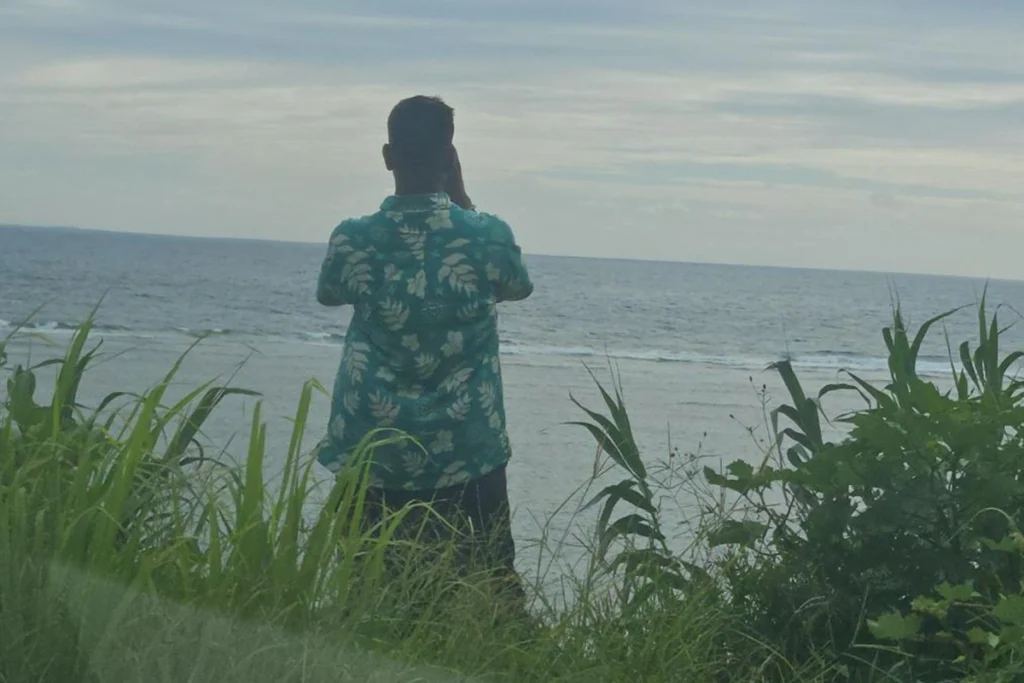
Shiv on a recent visit to his homeland
Shiv Singh was born and raised in Fiji and moved to Australia in 2014.
“While I probably picked up the virus in Australia, I learnt some of my bad habits in my homeland. I had tried drugs in my youth, and in Melbourne I soon found the gay party scene while taking little care of the risks to my health. In 2019, I was diagnosed with HIV and wasn’t able to give up my drug use. I ended up being gaoled for a year for a misdemeanour and my visa to Australia was cancelled.
“I was transferred to Immigration Detention but somehow I found the strength to appeal my sentence with the Immigration Review Tribunal. Amazingly I got Australian residency after eight months in detention.
“I had to rebuild my life. I found a warehousing job and decided to volunteer with Thorne Harbour Health and Living Positive Victoria (LPV) here in Melbourne. Through this work I met Emil, a worker with LPV and together we decided to set up the Positive South Asian group, to build peer support amongst HIV+ people from South Asian countries. The group has become a great support to me as I’ve been able to meet fellow Fijians living here too.
“Travelling back to Fiji from time to time I have seen some improvements in the government response, albeit that they have a big outbreak to turn around. There now is a peer support group called FJN Plus which aims to ensure HIV+ people are connected and able to learn from peers about developments in treatments and services.
There are no queer organisations in Fiji, which is a very conservative country and general acceptance of sexual diversity is very low.
“Friends I know there said there was still a lot of stigma and discrimination experienced by HIV+ people game enough to admit their status, and experiences of discrimination in healthcare are still common.
“I’m grateful to be living in this country with much better health care and community attitudes to people living with HIV.”
Australian Involvement
The Australian peak LGBTIQ+HIV organisation, Health Equity Matters is supporting Fiji’s national HIV response through a program focused on strengthening community-led prevention, care, and advocacy. This work is funded by the Australian Government Department of Foreign Affairs and Trade (DFAT) including support provided via UNAIDS under the Indo-Pacific HIV Partnership. The program focuses on expanding peer-led outreach, improving coordination across the national prevention response, and strengthening the organisational capacity of community organisations to sustainably deliver HIV services.
This aligns with Fiji’s national HIV outbreak response and aims to increase HIV testing, prevention awareness, and linkage to care, particularly among communities most affected by HIV. Health Equity Matters also plays a convening and coordination role, supporting national dialogue on prevention priorities and helping ensure community voices inform policy and program design.
Implementation is delivered in partnership with several Fijian community organisations and national stakeholders. Health Equity Matters works with the Pacific Sexual and Gender Diversity Network (PSGDN) as the primary in-country partner, alongside community-led organisations including Rainbow Pride Foundation, Fiji Network of People Living with HIV (FJN+), Strumphet Alliance, and the Survivor Advocacy Network. The program also collaborates with Fiji’s Ministry of Health and Medical Services and engages with technical partners such as UNAIDS, WHO, and UNICEF. Together, these partnerships support a coordinated, community-led HIV response that strengthens prevention, improves access to services, and builds sustainable leadership within Fiji’s HIV sector.
Related posts

Farewell, my friend
We were an item in the early eighties before we were even aware that HIV was circulating among us although we’d heard reports about this mysterious virus, initially called GRID (Gay Related Immune Deficiency) coming from the USA. When the HIV test became available in November 1984 we both made a quick dash to the […]

Heterosexual men living with HIV in Australia
The only thing worse than being talked about is not being talked about.
AIDS2026: Is HIV remission the new cure?
AIDS2026 offered a glimpse into the “just around the corner” future of HIV treatment and care.
