


Unpacking the HIV science at AIDS2024

Heather Ellis has lived with HIV since 1995. She is an HIV advocate, published author, journalist and motorcycle adventurer. Heather’s two books are the best-selling travel memoirs: Ubuntu: One Woman’s Motorcycle Odyssey Across Africa (Black Inc., 2016) and Timeless On The Silk Road: An Odyssey From London to Hanoi (Phonte, 2019). Heather is the communications and engagement coordinator for Positive Women Victoria based in Melbourne, a member of the National Network of Women Living With HIV Australia; and is a member of the community advisory board for the Melbourne HIV Cure Consortium. Read more about Heather at: www.heather-ellis.com
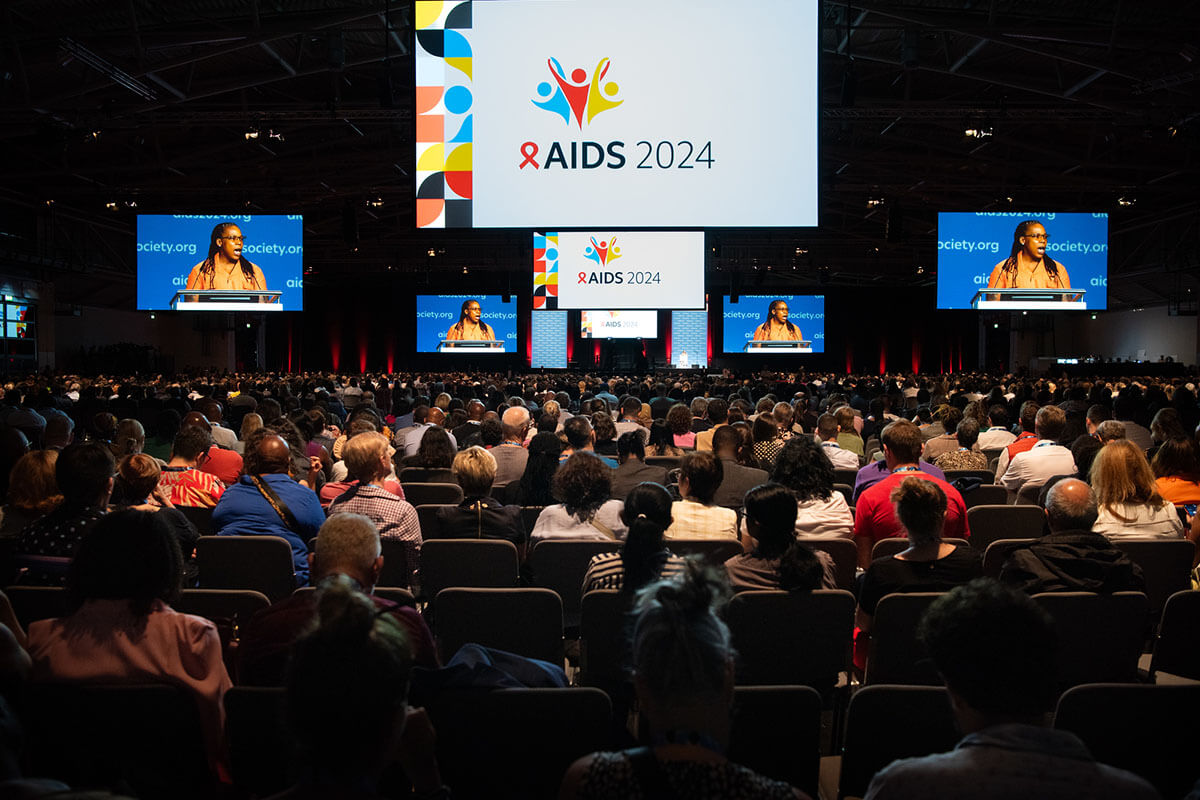
Hosted by IAS (International AIDS Society), AIDS2024, the 25th International AIDS Conference was held in Munich, Germany from 22 to 26 July. Held every two years in person and virtually, this is the world’s largest HIV conference bringing together scientists, clinicians, policy makers and people living with HIV to discuss and learn about the latest developments in HIV science and advocacy. The theme for AIDS2024 was: ‘Put People First’.

The 7th person cured of HIV
One of the most exciting conference stories was the 7th person cured of HIV. Known as “The Next Berlin Patient” after the city where he had the procedure, this person, who remains anonymous, received a stem cell transplant from a donor who has a genetic mutation of the CCR5 receptor, meaning HIV can’t attack their immune cells.
Timothy Ray Brown, the first Berlin Patient, received two copies of the CCR5 mutation as did most of the other people cured. The Next Berlin Patient’s donor only had one. It was previously thought that two copies were needed to block HIV.
At a pre-conference on HIV cure, we met three people who had been cured, including: The Dusseldorf Patient, Marc Franke; The London Patient, Adam Castillejo; and Paul Edmonds, The City of Hope Patient. Marc, who is 55, shared his experience from 11 years ago when he was diagnosed with blood cancer, had intensive chemotherapy and then received a stem cell transplant from a donor with two copies of the CCR5 mutation. Marc was the second person cured of HIV with a stem cell transplant.
The 6th person, The Geneva Patient, received stem cells from a donor with no CCR5 mutation. The results were presented at the IAS HIV Science Conference in Brisbane last year and scientists were very excited indeed. These latest two patients cured of HIV show that it’s not just about the CCR5 mutation.
Some scientists have theorised that the chemotherapy first washes most of the HIV out of the body and then with new immune cells, the body can beat what little HIV remains.
Because it is so invasive, intensive chemotherapy and a stem cell transplant is reserved only for those with terminal blood cancer.
Marc Franke shared how he endured four years of immunosuppressant drugs plus a cocktail of other treatments to manage side effects. As a result, he had liver inflammation, contracted a herpes infection that went to his brain, and lost bone density that led to a broken hip. In a recent publication describing 30 people with HIV with cancer in Europe who underwent this treatment, half died and only seven were cured. So, while stem cell transplants are not a universal cure, the latest two people cured does give scientists hope as they try to understand: ‘If it is not the CCR5 receptor, then what is it?’
Cracking the code of the HIV reservoir
AIDS2024 will likely be remembered as the HIV Reservoir Conference. Scientists know that no cure will be found without cracking the code of the HIV reservoir. It is here that latent HIV hides in the DNA of our long-lived immune cells where it cannot be reached by HIV treatment. Some of this latent virus is intact, meaning that even with antiretroviral treatment, cells can produce HIV particles which can cause low level inflammation. If HIV treatment is stopped, the HIV reservoir is suddenly woken up as nothing is suppressing it. HIV begins to replicate and destroys our immune system leading to AIDS.
The Last Gift Study and the HIV reservoir
Eleven people with HIV who donated their bodies to HIV science for The Last Gift Study were honoured at AIDS2024, and for what their gift revealed about levels of the HIV reservoir in tissues and organs. To get the most accurate measurement before cells decayed, autopsies needed to be performed within six hours of their deaths. Results reveal the true invasiveness of the HIV reservoir. While scientists have known that it hides in sites such as the gut and the lymph nodes, and to a lesser extent the brain, the autopsies revealed that the HIV reservoir is found in every tissue and organ.
Suddenly, the task of clearing the body of the HIV reservoir has got far more complicated and an HIV cure a more distant goal.
However, scientists now have more accurate data from these deep tissue samples and a better understanding of what we are dealing with.
Using bNAbs to clear the HIV reservoir hiding in the brain
Firstly, let’s take a moment to understand bNAbs, or broadly neutralising antibodies. Scientists discovered bNABs about 10 years ago by studying ‘elite controllers’: people with HIV who naturally control HIV to undetectable levels without taking HIV treatment. They found that some of these elite controllers had antibodies that were able to neutralise many different HIV strains. Scientists then found a way to make these bNABs in large quantities in the lab and give them via an infusion to people with HIV. The trials showed that virus levels were suppressed if repeated infusions were given, making this an exciting new treatment option. But when bNAbs were stopped, at best only a third of people were able to supress HIV for a prolonged time off treatment. The research continues and so far has not provided the potential cure results scientists had hoped.
While there was much excitement around bNAbs at the IAS Conference in Brisbane in 2023, at AIDS2024 this hype seemed to have died down. However, there was one session that used an innovative approach with bNAbs to reach the HIV reservoir hiding in the brain.
There is no point clearing the body of the HIV reservoir if it is not also cleared from the brain, no matter how small it might be. It just takes one intact viral particle for HIV to replicate, so for any cure to work it must cross the blood brain barrier. There are promising findings in ways to trick the brain into letting in bNAbs. The brain loves glucose (sugar), which it uses for energy. So scientists used bio-engineering to sugar-coat bNAbs. But normal bNAbs aren’t tiny enough to cross the blood brain barrier so these were also engineered as nano-capsules using antibodies taken from llamas.
Animals from the camel family, that includes llamas and alpacas, have much smaller antibodies than humans. These sugar-coated nano-bNAbs were injected into four baby monkeys infected with a monkey-form of HIV. Once inside the brain, the coating dissolves and the bNAbs attacked the HIV reservoir. Three of the four monkeys achieved full suppression of the HIV reservoir in their brains. But monkeys differ to humans and this research is still in its infancy.
Attacking the HIV reservoir with nano-packaged HIV drugs
We know how effective existing HIV drugs are in suppressing HIV, so scientists presented findings on how they have engineered existing HIV drugs into nano-formulations that will reduce the HIV reservoir. A trial using tenofovir disoproxil and emtricitabine (FTC/TDF) and dolutegravir (DTG) packaged into nano-formulations and injected into mice infected with HIV, showed a significant decrease in the P24 antigen. P24 is a viral protein produced by HIV, and any decrease signifies a decrease in the reservoir.
While scientists weren’t excited about this as a possible cure, these nano-packaged HIV drugs could pave the way for more effective long-acting treatments that may reduce the HIV reservoir and therefore reduce low level inflammation.
HIV reservoir in the gut and the role of GP120
In a session appropriately titled ‘The Devil Wears GP120’, researchers presented findings on the role of GP120, a protein that is shed by HIV infected cells. They think that GP120 may act as a toxin and could be a key driver of low-level inflammation even when on HIV treatment and with an undetectable viral load. The area where GP120 is shedding the most is in the gut as this is the largest site of the HIV reservoir.
When we lived in caves and ingested all sorts of crap from chewing mammoth bones, we also ingested pathogens, so it makes sense that the body’s immune system (CD4 T-Cells) is concentrated in the gut. The ‘gut’ starts in our mouth and runs all the way to our anus.
Unfortunately, we never fully recover from initial infection when HIV destroys CD4 T-Cells in the gut and weakens its permeability. This weakened barrier allows bacteria particles to penetrate our blood stream, especially from the small intestine, which then causes persistent low-level inflammation.
To help reduce this ongoing inflammation, the Canadian Re-Start Trial, in partnership with ViiV Healthcare, is looking at using the existing HIV drug fostemsavir to detoxify the body of GP120. Fostemsavir is an HIV attachment inhibitor which binds to and inhibits the activity of GP120 protein. It was FDA approved in 2020 for people with multi-drug resistance.
In their presentation, researchers advised that the addition of fostemsavir to an existing HIV drug regime may lead to decreased inflammation, improve immune function, and decrease heart disease risk. Previous studies showed that fostemsavir helps increase CD4 T-cell count.
But like all medications, there are side effects and some people taking fostemsavir can develop liver problems, especially those with a history of hepatitis. Findings from the trail are likely to be presented at the IAS HIV Science conference in Rwanda in 2025.
The answer may lie in CD8 T-cells, or Natural Killer cells
Scientists are looking deeper into CD8 T-cells, or Natural Killer cells, to find out why they are more robust in elite controllers. If science can find ways to reverse CD8 T-cell dysfunction then we may find a way to use these Natural Killer cells to wipe out the HIV reservoir when HIV drugs are stopped, and active virus starts replicating.
Scientists in this presentation showed how they are looking at Interluken-15, a protein, to serve as a growth factor for CD8 T-cells. Lab-manufactured Interluken-15 was used as a possible HIV treatment back in the 1980s and 1990s before effective HIV treatment was discovered. However, Interluken-15 has some nasty side-effects including renal failure and seizures. But it is early days and further research may discover ways around these side-effects to use Interluken-15 to boost our Natural Killer cells and gun down HIV as it emerges from hiding.
Is this the end of CRISPR-Cas gene-editing?
Findings on the first human safety trial using gene-editing was presented at AIDS2024. Six men with HIV had an infusion where CRISPR-Cas gene-editing targets HIV DNA and cuts it out. While there were no adverse effects, only five of the men stopped antiretroviral treatment, and of these five, HIV rebound occurred in four of them after two weeks.
The one person who was able to suppress virus for four months (at the time of reporting) is likely to have been a post-treatment controller. These are people (4% to 16%) who after stopping HIV drugs, naturally control HIV replication.
In this session, there was a real sense of doom, and I got the feeling some scientists have given up on gene-editing due to so many negative variables. These include the possibility of unintended large chromosomal deletions which could mean the loss of tumour suppressor genes. Plus, gene-editing must get 100% of the HIV DNA and this takes multiple editing infusions otherwise viral rebound will occur. Then patients need to be followed up for 15 years to monitor any long-term consequences. And the question was rightly asked: ‘Who pays for this?’
Gene-editing is already successfully used to treat Sickle Cell Disease at a cost of US$2.2 million per patient, so it’s hardly scalable for the 38 million people globally living with HIV. However, scientists have not given up and providing they continue to receive the ‘eye watering’ amounts of research funding, the CRISPR-Cas gene-editing show will go on.
Twice-yearly injectable lenacapavir for HIV prevention is 100% effective
The outstanding results from the PURPOSE 1 trial, which included 5000 young women from Africa, was presented at AIDS2024. The trial confirmed that a twice-yearly injection of the HIV drug lenacapavir made by Gilead Sciences demonstrated it was 100% effective for HIV prevention in cisgender women.
The PURPOSE 2 trial is now underway which is assessing lenacapavir for HIV prevention in other populations and countries. Researchers and HIV advocates at AIDS2024 advised a generic version of lenacapavir could be made for just $40 a year for each patient and still yield a 30% profit for Gilead. Lenacapavir currently costs US$42,250 for the first year, but slashing the price would herald a breakthrough for global HIV prevention by making it affordable and therefore rapidly and widely available.
Lenacapavir is already being used as a six-month injectable HIV treatment in combo with another HIV drug as a daily pill for people with HIV who have multi-drug resistance. There are also global clinical trials using lenacapavir and bNAbs where scientists are using the two together as an effective long-acting treatment that could be pushed out to one year. One theory is that for some people, their bodies will be trained to make their own bNAbs after a few or more years and then this combo treatment can be stopped.
This is being called a potential ‘functional cure’ by some. Gilead are also developing a ‘one-pill-a-week’ HIV treatment which is in clinical trials. Hopefully, we have some good news about this at the IAS HIV Science conference in Rwanda in 2025.
Inflammation and aging in people with HIV
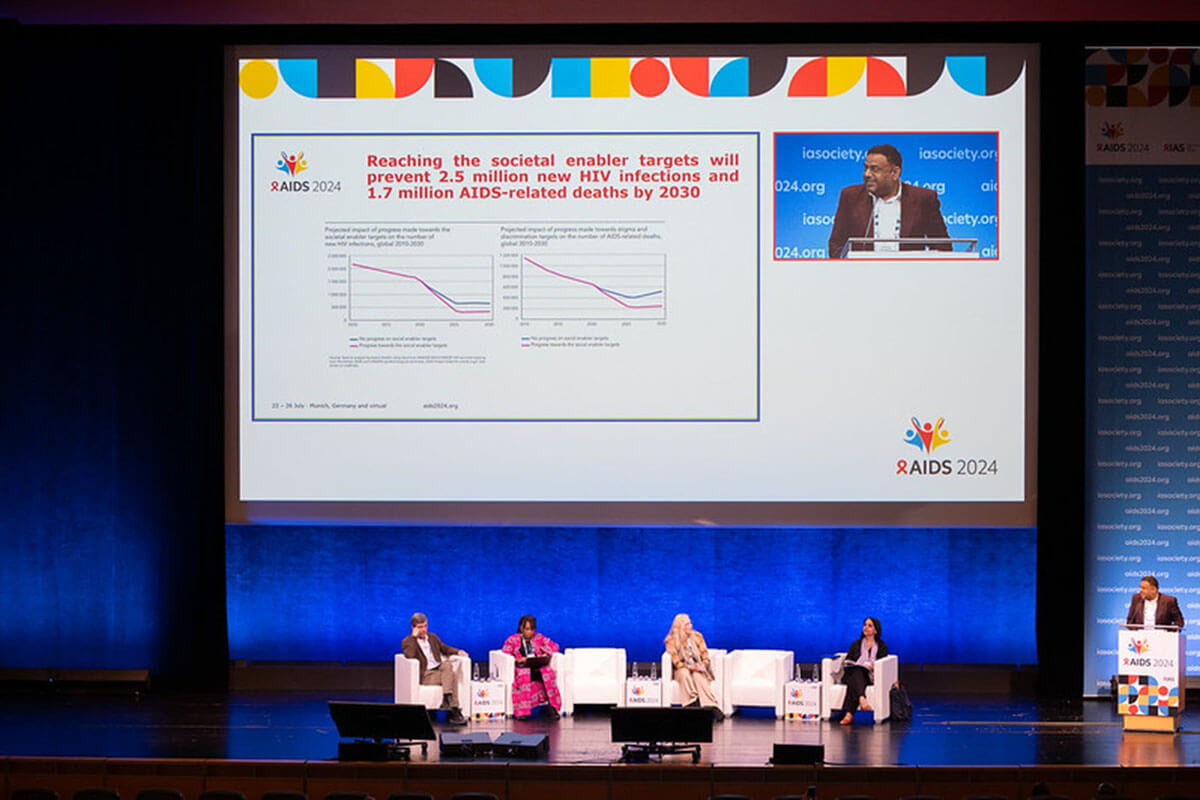
There were numerous studies presented on HIV and aging and one found that there was only a slight difference in co-morbidities (a sign of premature aging) in people aged around 50 years, but as soon as people with HIV were over 65 years, the increase in co-morbidities doubled if not tripled compared to people without HIV. While this increase might be attributed to low level inflammation caused from HIV even when on treatment, researchers said that other factors also come into play: smoking, obesity, lack of exercise, poor diet, poor sleep, recreational drugs, alcohol, ART toxicity for some people, and stress, including stress from HIV-related stigma (internalised and externalised). Researchers advised that more research was needed.
How do pro-aging glycans drive inflammation?
Glycans are molecules that sit on the surface of cells and, depending on cell health, both infectious and symbiotic organisms bind to these glycans. As we age, our anti-inflammatory glycans that combat inflammation change to inflammatory glycans. This happens to all people regardless of HIV and are called pro-aging glycans. After menopause, pro-aging glycans accelerate rapidly and this increases inflammation. This abundance of pro-aging glycans leads to reduced function of immune cells to control inflammation. A study presented at AIDS2024 analysed 1000 samples from people with HIV who were 50 years and older (50% male and 50% female on HIV drugs for five years or more), and found an accumulation of pro-aging glycans, which is what was expected. Scientists are now looking at ways to delay this change in our glycans including how improved nutrition can enhance the gut microbiota to reduce pro-aging glycans.
Can exercise reduce pre-mature aging in older people with HIV?
Exciting research on the benefits of exercise for people with HIV was presented, which showed the benefits are even more dramatic with higher intensity exercise such as strength training at the gym. The study followed a group of people aged 50 years and older with HIV and without HIV for 12 weeks and showed the physical function gains in both groups was about the same with all reporting greater improvements in cell function, cardiovascular health, and cognition. However, before the study most of the people with HIV had less fitness than those without. The researchers concluded that older people with HIV consider high-intensity exercise to improve their physical function and therefore reduce pre-mature ageing. Results of a second study on HIIT (High Intensity Interval Training), over 16 weeks with 120 people with HIV over 50 years will be available late 2024.
Menopause and the role of HRT for Women with HIV
HRT (Hormone Replacement Therapy) has never been studied in menopause and women with HIV, but a new study to commence in late 2024 announced at AIDS2024 will be the first. While HRT is accepted among women without HIV, there is a lot of ignorance from both women with HIV and their HIV doctors, a researcher advised. And while it is unclear if oestrogen loss from menopause for women with HIV increases aging more than women without HIV, it is clear that oestrogen loss increases inflammation (hot flushes), bone loss, vaginal dryness and cardiovascular risk in all women regardless of HIV status. And all are factors that contribute to increased pre-mature aging.
Controlling inflammation by repacking existing medications: statins, ozempic and spironolactone
Controlling low-level inflammation was a focus at a number of AIDS2024 sessions, especially the use of statins based on the overwhelming evidence from the REPRIEVE study. REPRIEVE, presented at the HIV science conference in Brisbane in 2023, showed there was a 35% reduction in cardiovascular disease (CVD) risk when people with HIV over 40 years were on a statin. Researchers are continuing to look at the benefits of statins for people with HIV and one study found that CVD risk reduced blood flow to the brain and this resulted in a greater brain age that could lead to dementia. Both the US and the UK have revised treatment guidelines for people with HIV and now recommend prescribing a statin for people with HIV over 40 years. Speak to your HIV doctor to find out if a statin is right for you.
Researchers were also excited about the potential of the diabetes and weight-loss drug semaglutide (ozempic) in reducing pre-mature aging through controlling low level inflammation. A study is in progress with results likely to be presented at the IAS HIV Science conference in 2025.
Using the high-blood pressure medication, spironolactone, a trial in mice showed inflammation was reduced in different tissues of the HIV-infected mice on HIV treatments. Spironolactone is an old medication that has been around since 1959.
Prof. Beatriz Grinsztein from Brazil takes over as IAS President
At the end of every AIDS conference, a new International AIDS Society president takes on the role. Melbourne’s Prof. Sharon Lewin stepped down as IAS president at the end of AIDS2024 handing over to Prof. Beatriz Grinsztein from Brazil. Prof Grinsztein, an infectious disease physician-researcher, will lead the IAS including its HIV Science Conference in Rwanda in 2025 and AIDS2026, which will be hosted in Latin America. The location has not been announced; however Brazil is rumoured as the hot favourite.
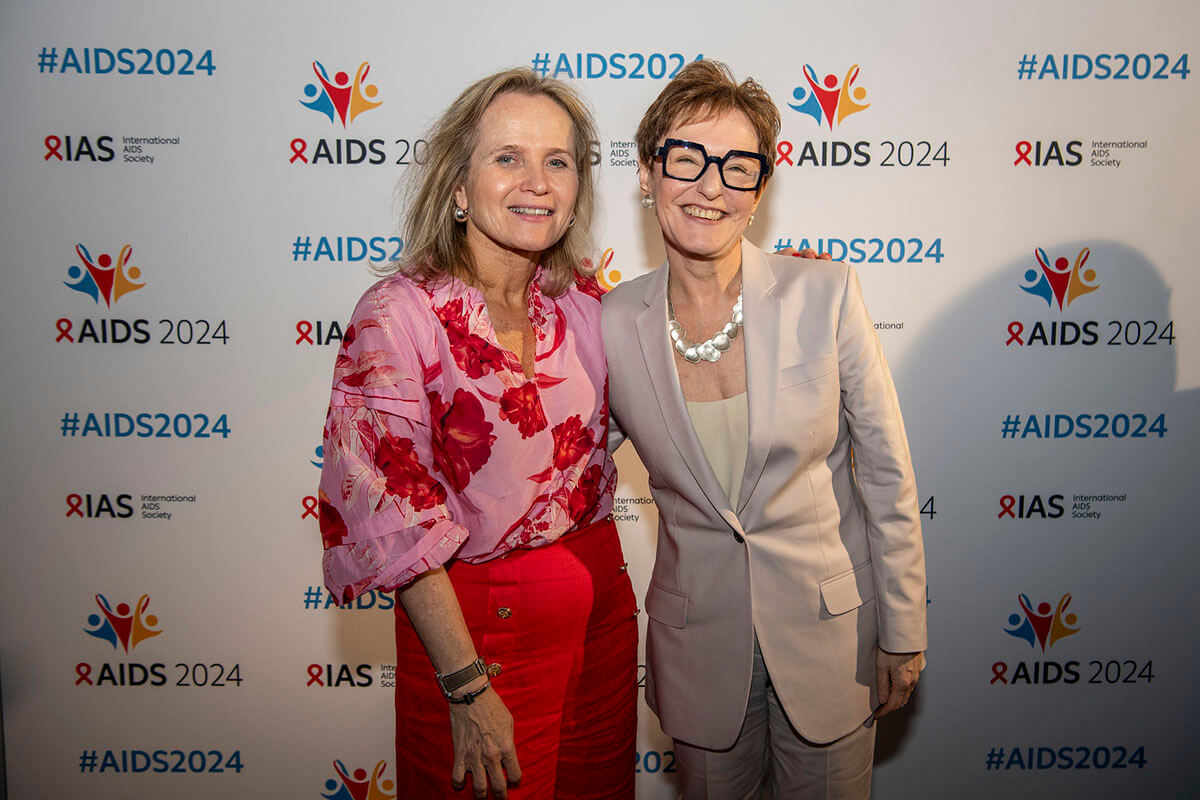
Sharon Lewin and Beatriz Grinsztein
Links
HIV Cure Australia website for latest updates on HIV cure research in Australia and around the world
AIDS2024 conference session recordings opens to public on 26 September 2024
Learn about the HIV reservoir in this webinar series: Where Do HIV Reservoirs Reside?
Related posts

AIDS2026: Is HIV remission the new cure?
AIDS2026 offered a glimpse into the “just around the corner” future of HIV treatment and care.

Book Review: A Girl from Kalk Bay by Susan Solomon
It was an inspiration to read a book entitled A Girl from Kalk Bay by Susan Solomon and to interview the author recently.

"I haven't got time to die."
Lyndal’s story of long-term survival, to still be around to turn 80 recently, is a remarkable one. It is testament to her determination to deal with the virus in her own way, regardless of what doctors and the medical establishment might have advised at the time. Twenty years with no antiretrovirals “I didn’t take HIV […]
