


Another fellow traveller
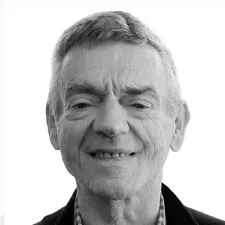
David Menadue was diagnosed with HIV in 1984 and has experienced a number of AIDS defining illnesses. He has been involved with HIV activism and policy advocacy since the late 1980s being involved in governance roles with NAPWHA, AFAO and Living Positive Victoria for many years. He is the author of an autobiography “Positive” published by Allen and Unwin in 2003 and was awarded an Order of Australia Medal in 1995 for services to community health.

Bev Greet was diagnosed the same time as I was in Melbourne in 1984. The virus was called GRID then, or Gay Related Immune Deficiency. It was renamed AIDS when it was clear it didn’t only affect gay men.
Much of our journey has been shared, as we mixed in the same circles over the years. Bev joined the peer group that a few of us had set up in the mid 1980’s called Melbourne Positive Friends. She was the only woman in the group, but she found solace in hearing other’s experiences. It helped reduce some of the fear and anxiety that society, particularly the media, was sharing at that time. We met in each other’s homes—often a different one each Thursday night—and it was something to look forward to each week. Sometimes there would be a guest speaker, an experienced HIV doctor or researcher who let people know about the latest developments in treatment, slow as they were at first.
Avoiding early treatments
Bev didn’t go on the early HIV treatments. “Which turned out to be a wise decision,” she recalls.
“I saw what AZT and those other early drugs did to my partner at the time where he got very ill and needed blood transfusions, and I decided to stick to complementary therapies.
“I took things like mistletoe, Vitamins B and C, acupuncture and other alternative therapies.”
Sadly, her partner at the time, David passed away but Bev was grateful that she wasn’t hospitalised then as she had a three-year-old son to look after. Her son is still a part of her life and has been a great source of support over the years. Including when she went on HIV treatment once they improved their side-effect profile in the late 1990s.
“The thing I was really missing through much of the 80s was not having another positive woman to share my experiences. I put up posters in sexual health centres asking any other women diagnosed to contact me on my home number.
“Then one day Deborah Gillies contacted me to say she was positive and would help put a group together. We didn’t have any funding as the Government at the time thought we were too small a group to warrant it. We did receive offers of places to meet: St Francis Church in the city, a church hall in East Melbourne and later we met at the Victorian AIDS Council offices, then in Johnston Street in Collingwood.”
Fairfield Hospital premises
“However, what we really wanted was premises and offices of our own. This happened in 1992 when the Victorian Government decided to give us enough funding for a worker, a car (to visit clients) and rental for premises. The Matron’s Cottage at Fairfield Hospital, no longer used for that purpose, was perfect for us as we could visit women patients in the hospital very easily. We employed our first worker, Jules Wilkinson, and before long, our numbers grew.”
I asked Bev if she experienced much stigma or negative treatment in those early days.
“Of course, you learnt to deal with ongoing stigma particularly if you were out about your status like I chose to be. One that surprised me was Women’s Health Victoria. They didn’t want Positive Women Victoria to be a member of their organisation because at that time they didn’t accept HIV as a woman’s health issue.
“They had the view then that we belonged with the drug user and sex worker groups and they couldn’t see that we had a place in their organisation, a view that has since changed with their more enlightened views on HIV. ”
Current situation
These days, Bev takes twenty pills every day. Ageing (she’s now 74) has brought new health conditions into her life: Type 2 diabetes, cardiovascular disease, kidney problems, macular degeneration and hypertension. HIV has played a role in the development of these conditions, probably including damage done when she wasn’t on HIV antivirals. Bev believes the research that people with HIV probably age sooner than their HIV-negative peers.
“I’ve recently tried Ozempic which helped me to lose weight, but my doctors say that it will be difficult to move my lipodystrophy stomach. That is a product of the early drugs, mainly the protease inhibitors, which I started in the late nineties but which undoubtedly also helped keep me alive.
“I’ve also developed osteopenia and take a medication called Polo to stop me developing osteoporosis, which so far has worked. It involves an injection every six months and visits to the dentist to monitor my jaw and teeth as a part of the treatment.
“All these medications and procedures make you value the expertise of the doctors who are managing my health and wellbeing so well. Some of my doctors’ care has been magnificent.”
Discovering her Aboriginality
Over the years Bev has investigated her heritage as she knew she had an Aboriginal grandmother.
“Initially my parents kept this a bit of a secret as they thought it might affect my future welfare. But Bev sought out some relatives after her grandmother died and found out she was a Gunditjmara woman and had relatives in Lake Condah near Portland in Victoria.”
From there Bev decided to get more involved with Aboriginal groups. She applied for a job with the Victorian Aboriginal Health Service (VAHS) as a sexual health and blood-borne virus educator and was successful. She then moved on later to a job with the Victorian Aboriginal Community-Controlled Health Organisation (VACCHO) in Collingwood where she visited Aboriginal mobs to conduct Well Person’s Health Checks. Her work also involved liaising with the Hepatitis C Council and visiting men’s and women’s prisons to talk about blood-borne viruses and other health issues.
Bev’s work involved promoting condom use as a part of her visits. The concept of Snake Condoms was invented by an Aboriginal group who decided it could be a fundraiser. Flavoured condoms were made in black (chocolate), red (strawberry) and yellow (vanilla).
They were sold by Aboriginal peers who received half the $2 price for each condom sold. Eventually the sales became national when the Marie Stopes organisation helped to sell the condoms nationwide.
PATSIN peer support
Maybe one of Bev’s major achievements was helping to set up the Positive Aboriginal and Torres Strait Islander Network (PATSIN) as an Associate Member of NAPWHA. Formally started in 2003, last year the organisation celebrated 21 years of advocating for Aboriginal people with HIV educating the community about the needs of their members. Bev helped make a booklet entitled “U and Me Can Stop HIV” for other Aboriginals to learn about prevention and the treatments available if you were HIV-positive.
“I was able to be photographed for this resource but I understand that some people in our community don’t feel able to be public about their status. They may have family or friends who haven’t been educated about HIV or live in small towns or remote places where such information could lead to stigma and discrimination against them, ” said Bev.
Final comments
Bev is grateful to still be alive all these years after diagnosis.
“I reflect on the grief and loss I’ve experienced in my life almost every day. It was a very intense experience to lose that many friends and to wonder how long you were going to live. I am grateful to have had a partner, Lloyd for 35 years. He has been very ill himself for a long time, on and off with HIV-related illnesses and a recent cancer diagnosis from which he is in remission.
“There are great blessings, too. My son is now a Doctor of Environmental Science and he and his partner have given me two granddaughters who I love very much.
“Perhaps the thing I am most proud of is setting up Positive Women Victoria all those years ago. From an organisation of two in 1988 we were patient and determined and eventually the numbers grew to the hundreds.
“It represents our needs very strongly to governments and other partners in the sector.
“We are the only organisation that connects and advocates for positive women in Victoria and I know many positive women, including myself, feel we wouldn’t have done so well without it.”
Bev was awarded an Order of Australia Medal in 1999 in recognition of her many years working for community causes.
Related posts

Farewell, my friend
We were an item in the early eighties before we were even aware that HIV was circulating among us although we’d heard reports about this mysterious virus, initially called GRID (Gay Related Immune Deficiency) coming from the USA. When the HIV test became available in November 1984 we both made a quick dash to the […]

Heterosexual men living with HIV in Australia
The only thing worse than being talked about is not being talked about.
AIDS2026: Is HIV remission the new cure?
AIDS2026 offered a glimpse into the “just around the corner” future of HIV treatment and care.
