


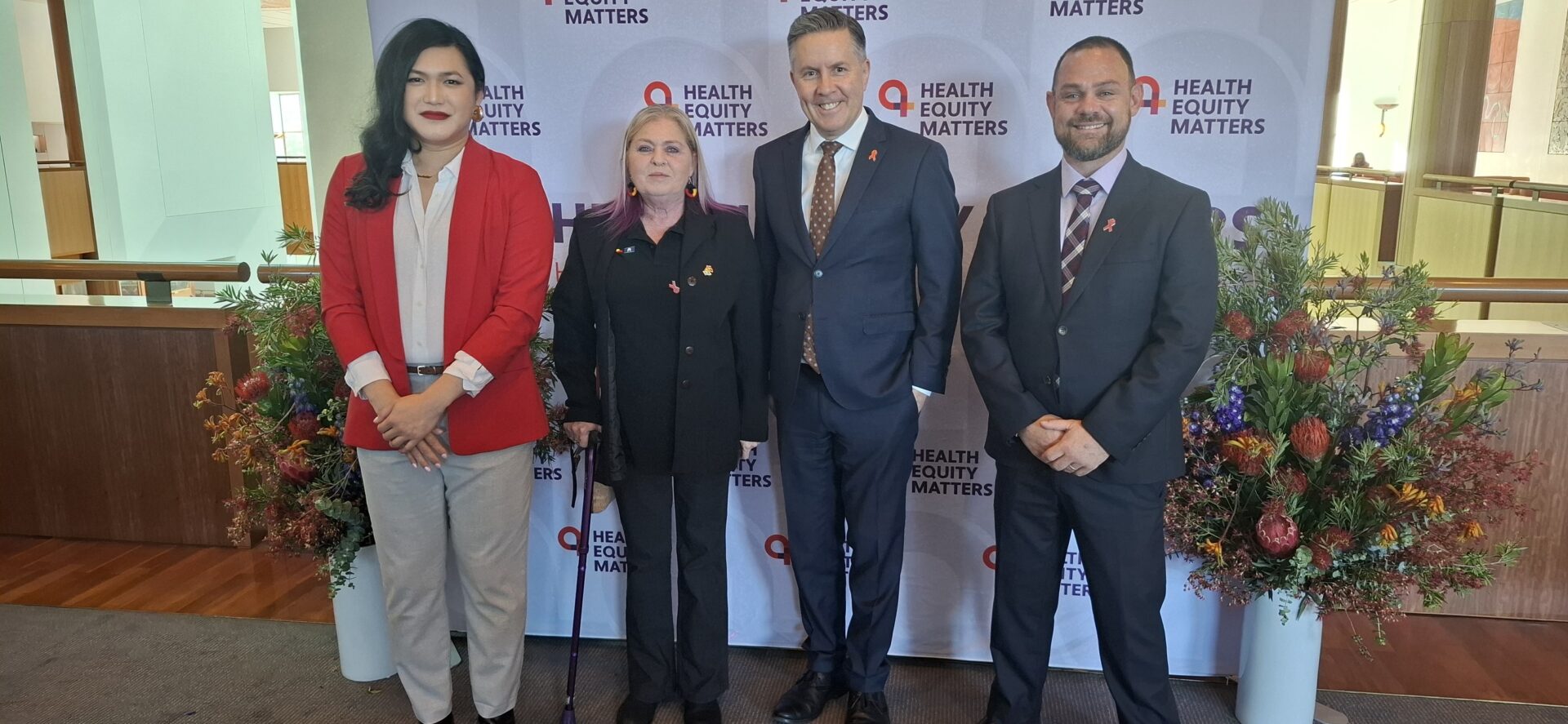
The National Association of People with HIV Australia (NAPWHA) has welcomed the Albanese Government’s announcement of $41.7 million over three years to drive progress toward eliminating HIV transmission in Australia by 2030.
Announced by the Minister for Health and Ageing, the Hon Mark Butler MP, on World AIDS Day, the package will improve quality of life for people with HIV, strengthen HIV awareness, prevention, testing, treatment and access to care with a particular focus on underserved communities who continue to face barriers.
NAPWHA and Health Equity Matters will receive $14.1 million to support national leadership, advocacy and peer-led programs for people living with and affected by HIV. A further $27.6 million will fund community-led initiatives that expand access to testing and prevention, including training for health professionals working with recently arrived and overseas-born people at risk of acquiring HIV.
“More than 30,000 Australians are living with HIV. This investment is a clear signal that the government is serious about ending transmission and boosting the quality of life of people with HIV in Australia today,” NAPWHA’s President, Scott Harlum said. “We particularly welcome Minister Butler’s assurance that no one will be left behind, regardless of who they are or where they live.”
NAPWHA applauds the federal government’s commitment to extend NAPWHA’s HIV self-test program, HIVTest.au, allowing up to 24,000 tests a year to be delivered to more than 6,000 people at risk of HIV transmission. This continued investment will enable HIVTest.au to boost Australia’s testing rates and drive down community transmission. In its first year of operation, one in four users of the service had never previously tested for HIV.
“On behalf of people living with HIV across Australia, we thank the Albanese Government and Minister Butler for this important and timely commitment,” Mr Harlum said. “With sustained investment, a strong partnership approach and a relentless focus on equity and stigma, Australia can be the first country in the world to achieve virtual elimination of HIV transmission and be a model for countries around the world in strengthening the quality of life for people with HIV.”
